Hi Friends! I’ve created an ecological trophic cascade game that I’ve called “Trophle” and I’m trying to get the word out. Each day there will be a new puzzle. I’m a mom of five in New Hampshire finishing up a degree in environmental science, and thought this would a fun thing to make. Play at trophle.com.
The Enigmatic Oracles of the Pythia: Ambiguity, Power, and Interpretation in the Ancient World
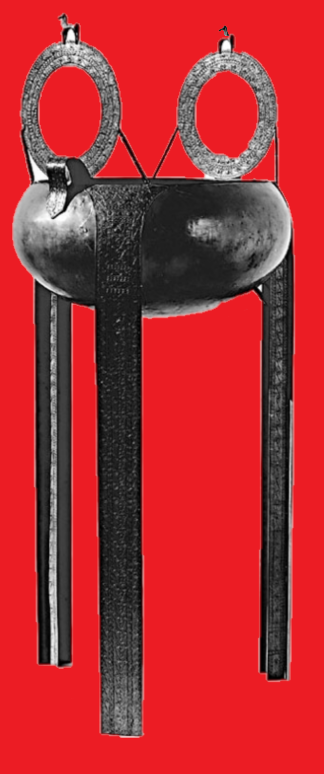
For centuries, the Oracle of Delphi stood at the spiritual and political center of the ancient Greek world. At its heart was the Pythia, the priestess whose cryptic utterances shaped decisions of cities, kings, and generals. Seated upon the sacred tripod, enveloped in vapors from burning substances—possibly laurel oil—into which she dipped her fingertips, the Pythia entered a trance-like state. Her fragmented, often unintelligible words were then “translated” by the priests into what became the official oracle.
From this mysterious process emerged a modern Greek expression still used today: “Do you want me to smell my fingernails?” A humorous phrase, it reflects the impossibility of knowing something hidden or unknowable—much like deciphering the Pythia’s riddling prophecies.
The Art of Ambiguity
Delphic oracles were famously ambiguous. Their power lay not in clarity but in the ability to be interpreted in multiple ways—often with dramatically different consequences. Two classic examples illustrate this linguistic duality:
“Ήξεις αφήξεις ουκ εν πολέμω θνήξεις.”
A single comma could determine life or death:
“Ήξεις, αφήξεις ουκ, εν πολέμω θνήξεις” You will go, you will not return; you will die in war.
“Ήξεις, αφήξεις, ουκ εν πολέμω θνήξεις” You will go, you will return; you will not die in war.
“Άρρεν ου θήλυ”
Again, punctuation changed everything:
“Άρρεν ου, θήλυ” Your wife will not bear a boy, but a girl.
“Άρρεν, ου θήλυ” Your wife will bear a boy, not a girl.
These examples reveal how the oracle’s phrasing allowed for interpretations that could conveniently match any outcome.
Historical Oracles That Shaped Events
Ambiguity was not merely a linguistic curiosity—it influenced the course of history.
The Wooden Walls of Athens (480 BC)
When the Persians threatened Athens, the Pythia declared that “the city will be saved by its wooden walls.” Some Athenians interpreted this literally and fortified the Acropolis with wooden palisades—only to perish shortly after. Others followed Themistocles, who argued that the “wooden walls” referred to the Athenian fleet. Their decision led to the decisive Greek victory at Salamis.
The Spartans and the Peloponnesian War
At the outbreak of the war, the Spartans received the oracle: “If you fight with all your strength, you will win.” A perfect double-edged prophecy: If they won, it meant they had indeed fought with full force; if they lost, it meant they had not.
Callistratus and the Lawful Fate
When Callistratus asked whether he would be vindicated upon returning to Athens, the oracle replied: “In Athens you will receive what is lawful.” A statement that could mean acquittal—or condemnation. History chose the latter.
From Ancient Oracles to Modern Misinterpretations
Even in later eras, the spirit of Delphic ambiguity survived. The well‑known phrase “πίστευε και μη ερεύνα”, (believe, and do not search), is actually a distortion of Christ’s biblical exhortation “search the Scriptures.” Early Christians used the altered version to oppose scholars who sought to study the Bible through scientific methods. Later thinkers shifted the comma yet again, producing: “πίστευε και μη, ερεύνα”, (believe and do not, search) a modern echo of the Pythia’s enigmatic style.
Puzzle Prime is a massive website that contains all sorts of interesting topics ranging from educational quizzes to fun little puzzles that you can do. This website also has a community section where you can post your own educational or puzzle-related content to have other people comment on it or solve it.
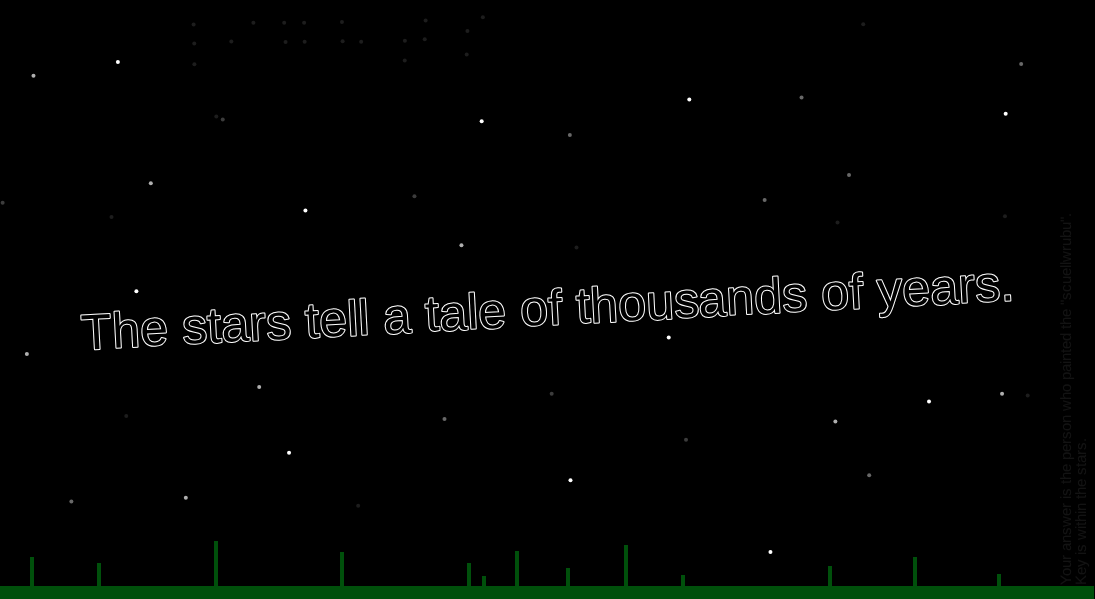
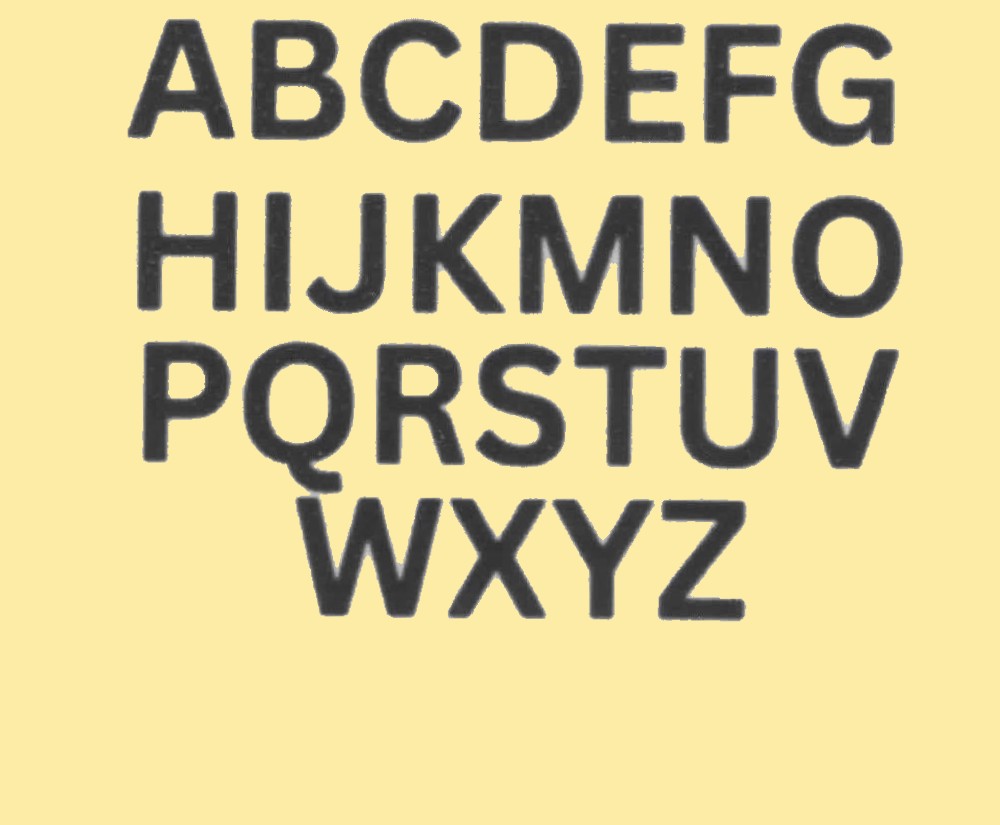
There are many people who have been on this website for a seemingly good and lengthy amount of time, such as STADAS or Puzzle. However, for those who have been on this website for a good while now, I would like to see how well you know your own website. This puzzle is designed to test your knowledge of other puzzles on this website and use those to solve this puzzle.
PUZZLE
This puzzle is harder than the first one. I wish you the best of luck.
Puzzle Prime is a massive website that contains all sorts of interesting topics ranging from educational quizzes to fun little puzzles that you can do. This website also has a community section where you can post your own educational or puzzle-related content to have other people comment on it or solve it.
There are many people who have been on this website for a seemingly good and lengthy amount of time, such as STADAS or Puzzle. However, for those who have been on this website for a good while now, I would like to see how well you know your own website. This puzzle is designed to test your knowledge of other puzzles on this website and use those to solve this puzzle.
PUZZLE
This puzzle is relatively simple. Just decode the text below.
How the Athenians placed marble blocks weighing tons on the Acropolis:
The Athenians had discovered lifting methods that were pioneering for their time. An example is the “ἀπὸ μηχανῆς θεός” in ancient Greek, or Deus ex machina in Latin, which in drama referred to the sudden intervention of a god, person, or object, appearing on stage with the help of a crane to resolve the plot. Similarly, in the construction of the Acropolis, a system of pulleys and wooden cranes was used. Huge pulleys tied to two wagons (one on each side acting as counterweights) lifted tons of marble. Around the Parthenon, at least eight large cranes and several smaller ones inside the temple were in operation. With this system, they could raise marble blocks weighing 10 tons to a height of 15 meters in just 20 minutes. More than 20,000 tons of marble from Mount Penteli were used, transported over a route that took more than six hours. At least 20 wagons made continuous trips daily. Marble workers from Paros, Naxos, and Asia Minor, as well as free citizens, settlers, and slaves, worked on these projects. The Parthenon began construction in 447 BC and was completed in 432 BC—a record time for that era. It was built on the ruins of a previous temple of Athena, destroyed by the Persians during the Persian Wars.
2. The decoration of the Acropolis was full of color:
Many parts of the sculptural decoration, the architraves, and the ceiling were painted in blue, red, and gold.
3. The Golden Ratio:
The 000interior length of the Parthenon is 100 Attic feet, with one Attic foot measuring 0.30803 meters. This corresponds to 1/2Φ, where Φ = 1.61803 expresses the Golden Ratio. The number 1.618, or the golden number Φ, is often found in nature, in the proportions of the human body, in plants, animals, art, and even in the universe itself.
4. Mathematical symmetry in the Parthenon:
Within the proportions of the Parthenon, besides the Golden Ratio, we also encounter the Fibonacci sequence. This is the sequence in which each number equals the sum of the two preceding ones: 1, 1, 2, 3, 5, 8, 13, 21, 34, 55, 89, 144, etc. Inside the Parthenon, the number π = 3.1416 appears, expressed by the relation meters, and six cubits give us π = 3.1416. Likewise, the Napierian number e = 2.72 is approximately equal to .
5: Light in the Parthenon:
According to archaeologymag.com, the chryselephantine statue of the goddess Athena was illuminated during the day by sunlight entering through the eastern gate, while the rest of the temple remained dark, creating a striking, deliberate optical illusion. An international team of experts, led by archaeologist Juan de Lara from Oxford University, managed to create an impressive virtual reconstruction of the Parthenon as it was in 432 BC.
In the entire architectural construction of the Parthenon, there are no straight lines. Only subtle, imperceptible curves exist, which nevertheless give the impression of perfect straightness—for example, that the stylobate is straight and completely level. Ictinus and Callicrates, the architects, took into account the natural imperfection of the human eye, which tends to distort images, and decided to correct this optical illusion. Thus, the columns have a slight swelling called “entasis” about halfway up their height. The axes of the columns, the frieze, and the architrave also have a subtle inward inclination of about 0.9 to 8.6 centimeters. If we mentally extend the axes upward, they form an imaginary pyramid. The base of the temple is actually domed, so the four corners of the platform slope gently downward. This means that if someone stood on the top step and looked along the building, and another person stood at the opposite end on the same step, they would see each other only from the knees upward. Even the architraves, the horizontal parts supporting the roof, follow the same principle. Thanks to these adjustments, the Parthenon is a harmonious masterpiece.
Even today, architects and scientists studying these techniques wonder how the ancients achieved such perfection without modern tools.
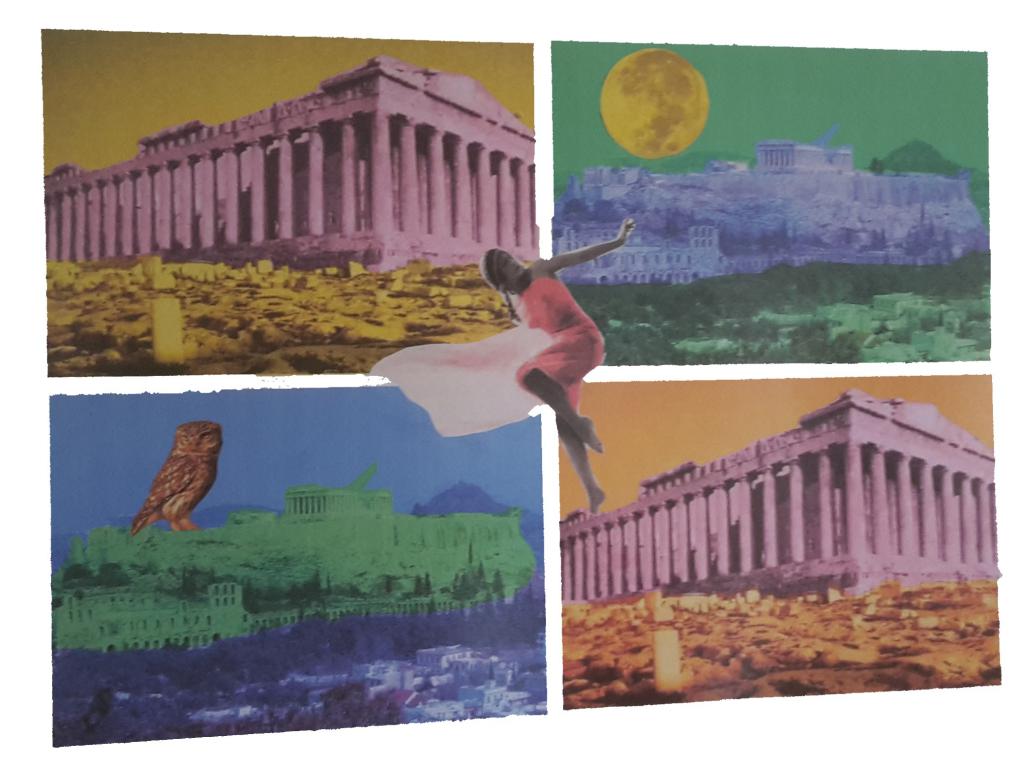
The collage
The following collage is the work of the author of this article and was presented in 2015 at the Peristeri Town Hall in the group exhibition of the Association of Visual Artists of Greece “Apelles.”