

Curve in a Box
Is it possible to design a simple closed curve inside a box, such that its projections on all 6 walls of the box are trees, i.e. curves without loops?
SOLUTION
Yes, it is possible, as shown on the image below.
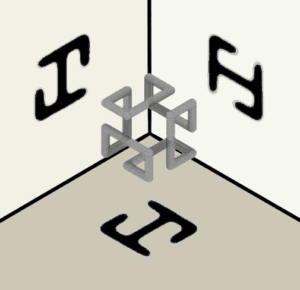

Is it possible to design a simple closed curve inside a box, such that its projections on all 6 walls of the box are trees, i.e. curves without loops?
Yes, it is possible, as shown on the image below.

Huey has 3 donuts, Dewey has 5 donuts. Louie comes along and the three of them split the donuts equally. In exchange, Louie offers 8 candies to Huey and Dewey. What is the fair way to split the candies?
Huey must take 1 chocolate, and Dewey must take 7. This is because each of them ate 8/3 donuts, and therefore Huey gave away 1/3 of a donut, whereas Dewey gave away 7/3 of a donut.

You throw away the outside and cook the inside. Then you eat the outside and throw away the inside. What do you eat?
The answer is CORN.
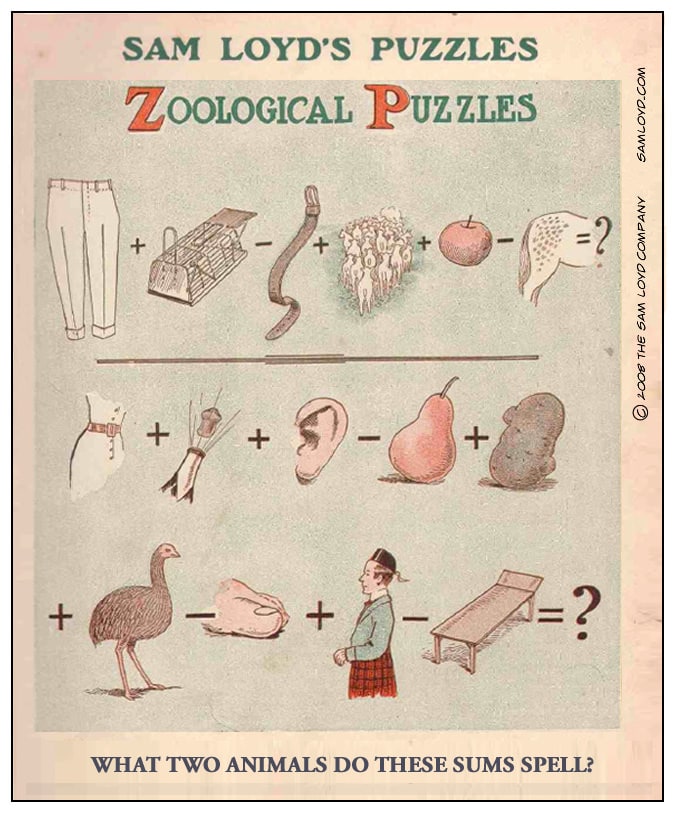
What two animals do these sums spell?
PANTS + TRAP – STRAP + HERD + APPLE – DAPPLE = PANTHER
HIP + POP + EAR – PEAR + POTATO + EMU – TOE + SCOT – COT = HIPPOPOTAMUS
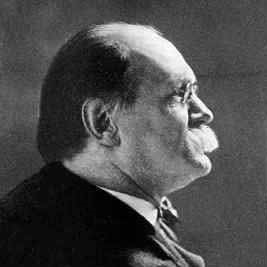
None of these statements is correct.
At most 1 of these statements is correct.
At most 2 of these statements are correct.
…
At most 98 of these statements are correct.
At most 99 of these statements are correct.
How many of these statements are correct?
If the number of true statements is X, then statements 1, 2, … , X are wrong, and the rest are correct. Therefore X = 100 – X and X = 50. Thus, there are 50 correct statements.
You must find a 3-digit number. You know that:
What is the number?
The first and second clues imply that the 6 is not a part of the number. The third clue then implies that 2 and 9 are parts of the number. Now the first clue implies that 2 is the last digit of the number, and the third clue implies that 9 is the first digit of the number. Finally, the second clue implies that 4 is the second digit of the number. Therefore, the number is 942.
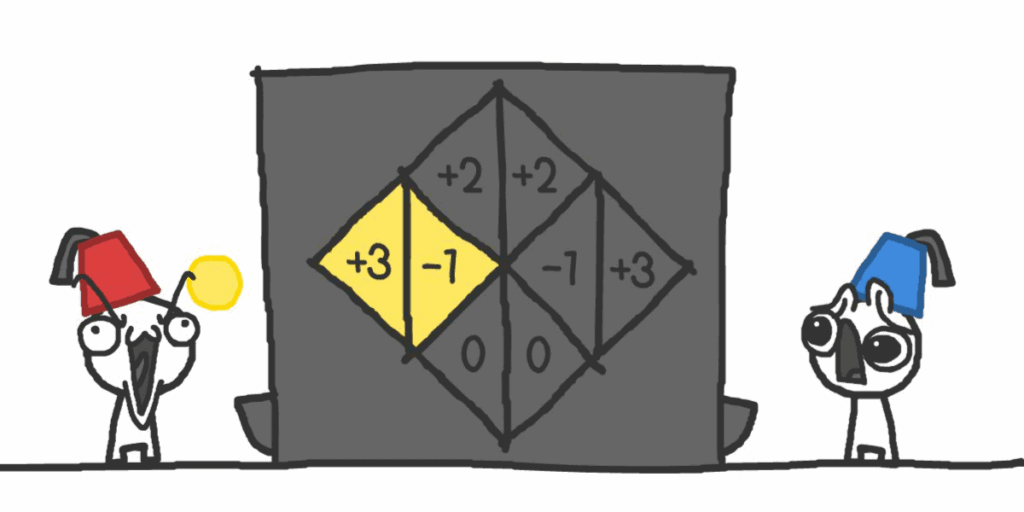
Game Theory is an intriguing subject in Mathematics, with various real-life applications. Even though many people have heard about the “Prisoner’s Dilemma” – one of the most famous problems in the field, few have delved deeper into the theory. Fortunately, Nicky Case (also a creator of “Parable of the Polygons”) is here to help again, by educating us in a fun, engaging manner. Check out his quick, 30 minutes introduction to Game Theory by clicking the image below.

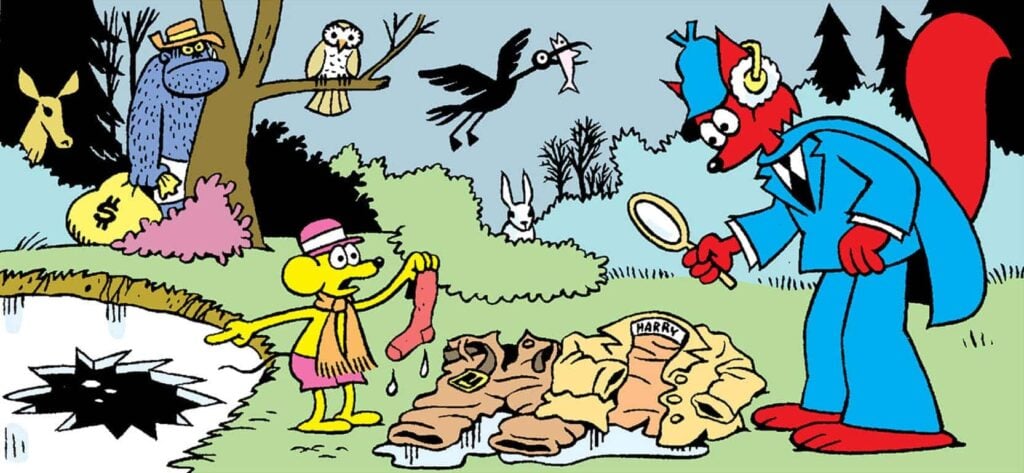
Harry Ape robbed a bank yesterday and has been hiding in the bitterly cold forest. Max Mouse found Harry’s clothes near a hole in the pond ice. Why does Slylock Fox believe that Harry is nearby?
Slylock thinks Harry fell through the ice, and after climbing out of the water, took off his wet clothes due to the frigid temperatures. The sleuth suspects the ape is nearby because the wet clothes are still unfrozen.

You need to cross a river, from the north shore to the south shore, via a series of 13 bridges and six islands, which you can see in the diagram below. However, as you approach the water, a hurricane passes and destroys some (possibly none/all) of the bridges. If the probability that each bridge gets destroyed is 50%, independently of the others, what is the chance that you will be able to cross the river after all?
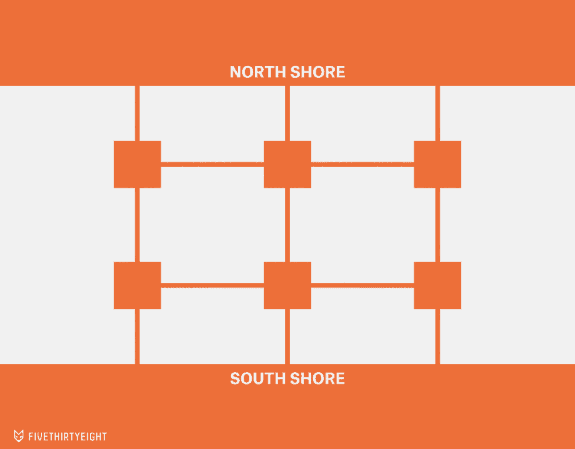
Imagine there is a captain on a ship, who wants to sail through the river from West to East. You can see that he will be able to do this if and only if you are not able to cross the river. However, if you rotate the diagram by 90 degrees, you can also see that the probability that you cross North-South is equal to the probability that he sails West-East, and therefore both probabilities are equal to 50%.
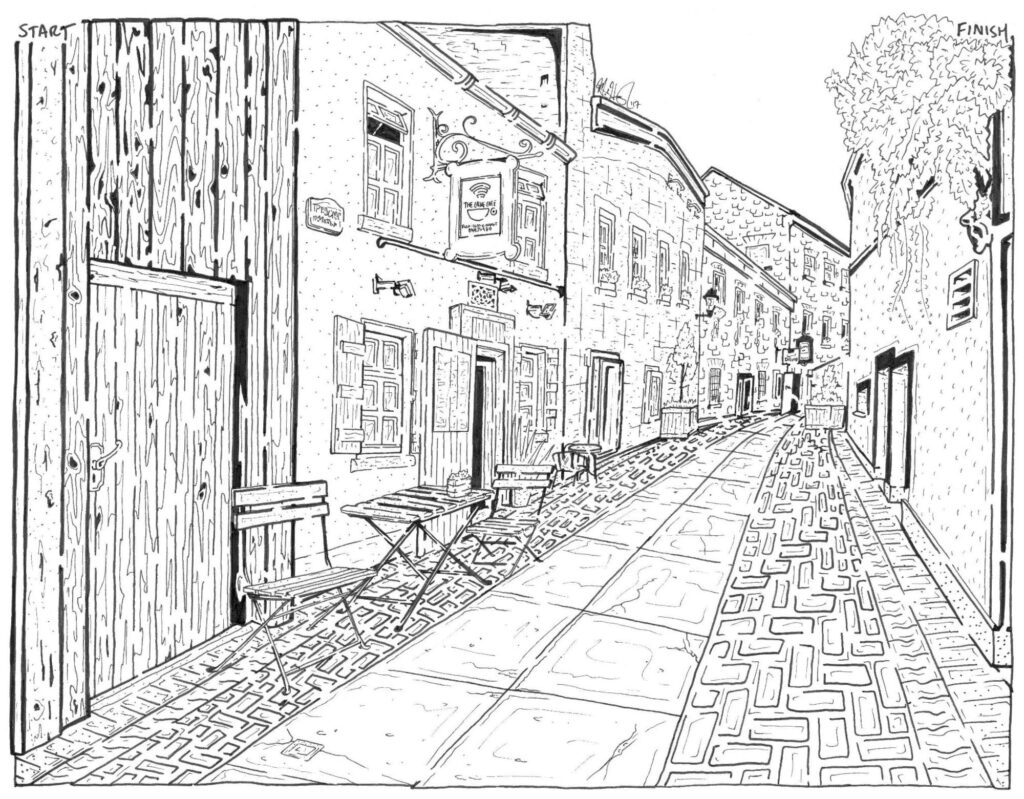
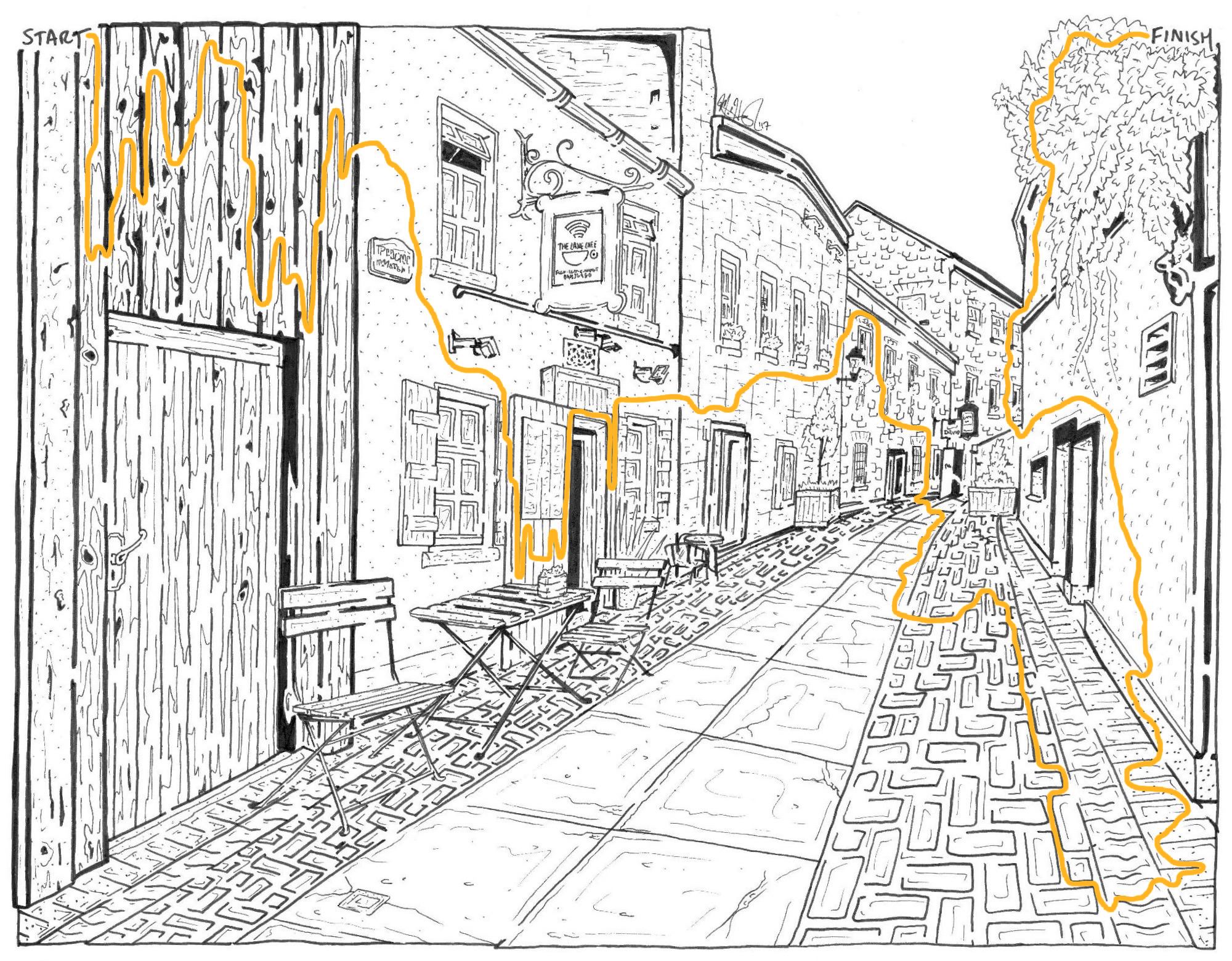
Get from START to FINISH in this landscape maze, created by Matthew Haussler.
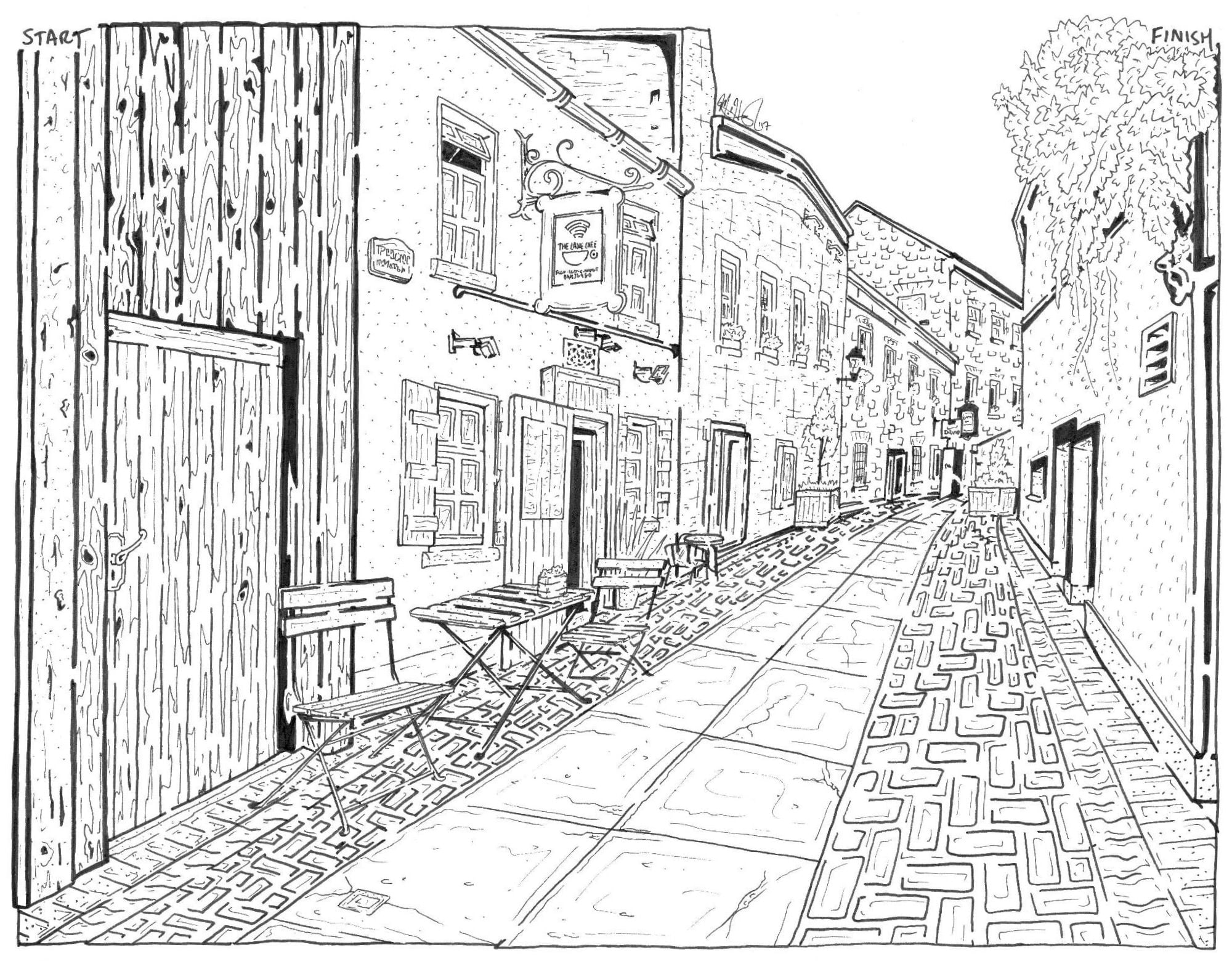
The solution is shown below.

Please confirm you want to block this member.
You will no longer be able to:
Please allow a few minutes for this process to complete.